
Does the work of Restore have a lasting impact?
One befriended refugee said, “Restore doesn't just connect people, it connects lives, opportunities and futures.” As a result of Restore’s work, do refugees and asylum seekers move from being isolated and lonely to being connected with people beyond their own nationality? Does Restore’s work improve wellbeing and mental health? Does Restore help refugees to progress with learning English and understanding life in Birmingham and the UK?
Feedback from those befriended shows the following, of those who replied to surveys:
● 97% stated that meeting their befriender had helped them feel more welcome
● 96% stated that meeting their befriender had helped them feel more confident
● 94% stated their befriender had helped them feel less lonely
● 94% stated their befriender had helped them improve their English
● 89% stated their befriender had helped them learn about Birmingham and life in the UK
● 87% stated their befriender has helped them make friends with someone from Birmingham
● 86% stated their befriender had helped their mental health and wellbeing Furthermore, they would recommend befriending to others as 81% replied that having a befriender would help other refugees and asylum seekers and the remaining 19% said it might help another refugee. There was similar feedback in 2025 from Restore’s group social activities for men and women.
● 99% of participants who responded said they had enjoyed the activity.
● 99% of participants who responded said they had met new people and made new friends.
● 96% of participants who responded said they had learned some new English.
● 94% of participants who responded said they had learned something new about Birmingham or the UK.
Many of these progressions resonate with the Home Office’s Indicators of Integration particularly social bridges from the refugee community to the host community and language improvement. These impacts also resonate with the NHS 5 ways to wellbeing, notably connections with others and opportunities for new learning.
Looking further at impact, statistics reveal an overview, it is stories that show the deeper personal impact. There are many short quotes on the Restore website, which encapsulate the impact for refugees and volunteers. To illustrate that we have included the story a befriending relationship that has developed over the past 2 years and a befriending relationship from longer ago where the refugee acknowledges the longer-term impact on his career and family. (The names been changed, so that the individuals involved remain anonymous.)
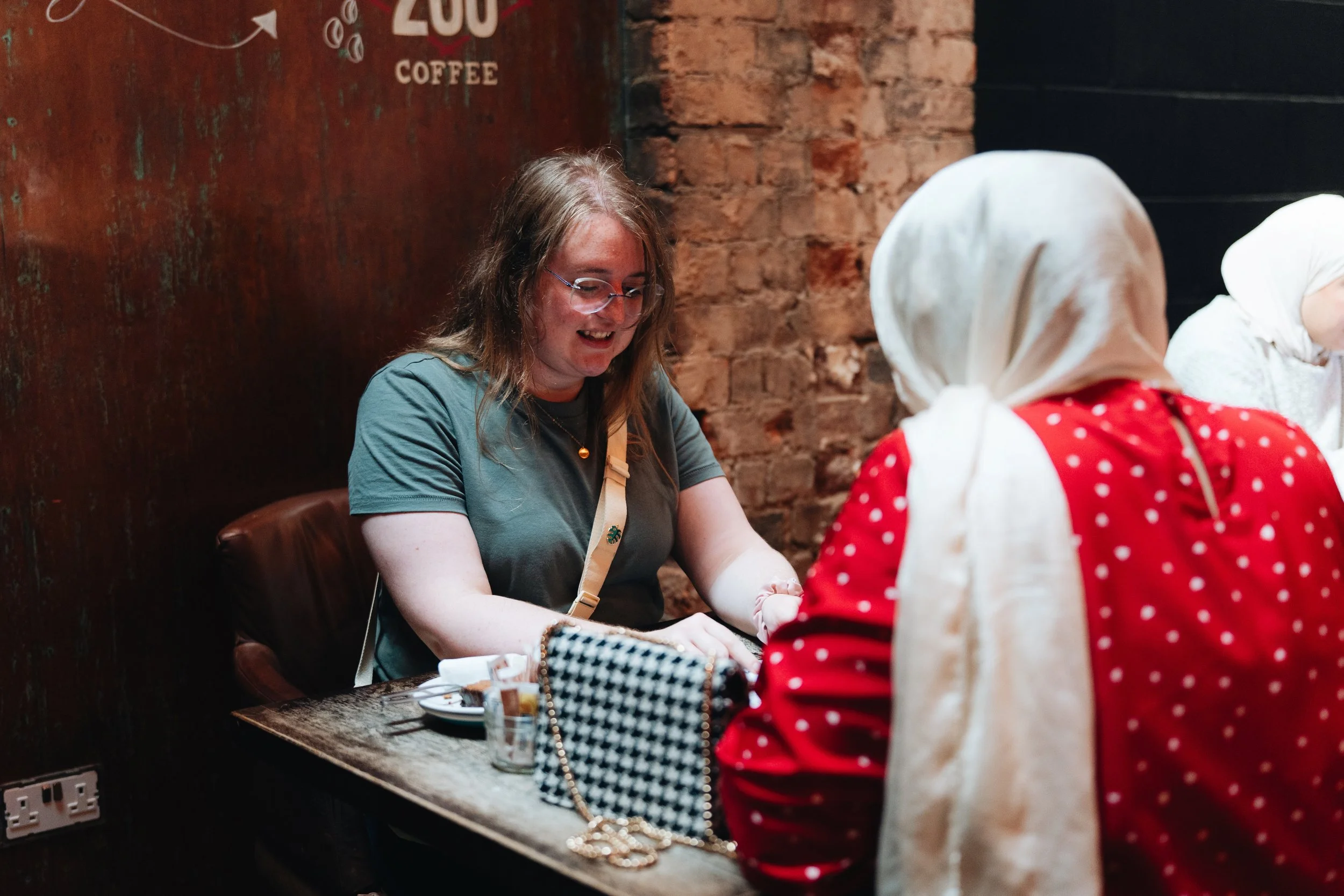
Due to Maryam’s low level of English, she found it hard to access local services, and to find a local school for her children. Sally helped by phoning the City Council and local schools so that Maryam’s young twins could access education in the UK. Sally accompanied Maryam to another charity, to the dentist and to enrol on a college course to learn English. Through the experience Sally learnt how difficult it is for an asylum seeker to adapt to a new country, especially without a strong understanding of the language.
Both Sally and Maryam learnt about cultural differences between the UK and Ethiopia. One particular moment Sally recalled was seeing Maryam’s surprise when her college application form had more than two gender options which was something she had never encountered before. Sally described how Maryam had shared many life lessons with her including the importance of smiling despite adversity, and how smiling had helped her to keep her out of trouble when she was homeless. Sally expressed that she found the experience very rewarding and had learnt a lot from it. The two women have formed a great befriending relationship and continue to enjoy learning from each other’s cultures and meeting together.
Within this befriending match, we can see that all Restore’s key aims for befriending have been met. This is further evidenced from our spidergram tool which shows improvement in all four of our measured outcomes. The first is friendship and building a relationship with someone in Birmingham. Maryam reported that she has built a great friendship with Sally and described her as kind and helpful.
Secondly, Maryam reported that improved English had been a key area of progress. Maryam has had the opportunity to practice her English with Sally, and this has helped her develop confidence in speaking the language. At her first contact with Restore, Maryam rated her confidence with speaking English as a 2 out of 5 but now reports 5 out of 5. This demonstrates the importance of informal English practice in enabling someone to achieve a level of confidence necessary for interacting with the local community and accessing services.
Thirdly, Maryam reported an improvement in her health from 1 to 5. She had suffered from poor mental health, but Sally has helped her to access professional support from another charity, as well as support with her physical health via a dentist. Previously, Maryam was unaware of the mental health support she could receive from another charity and could have struggled to access this without the support of a befriender.
Finally, Maryam has developed a greater understanding of the UK culture and has had the opportunity to learn from her befriender. Sally reported that they enjoy conversations about differences between their cultures, and Sally has found this to be one of the most valuable aspects of the befriending match.
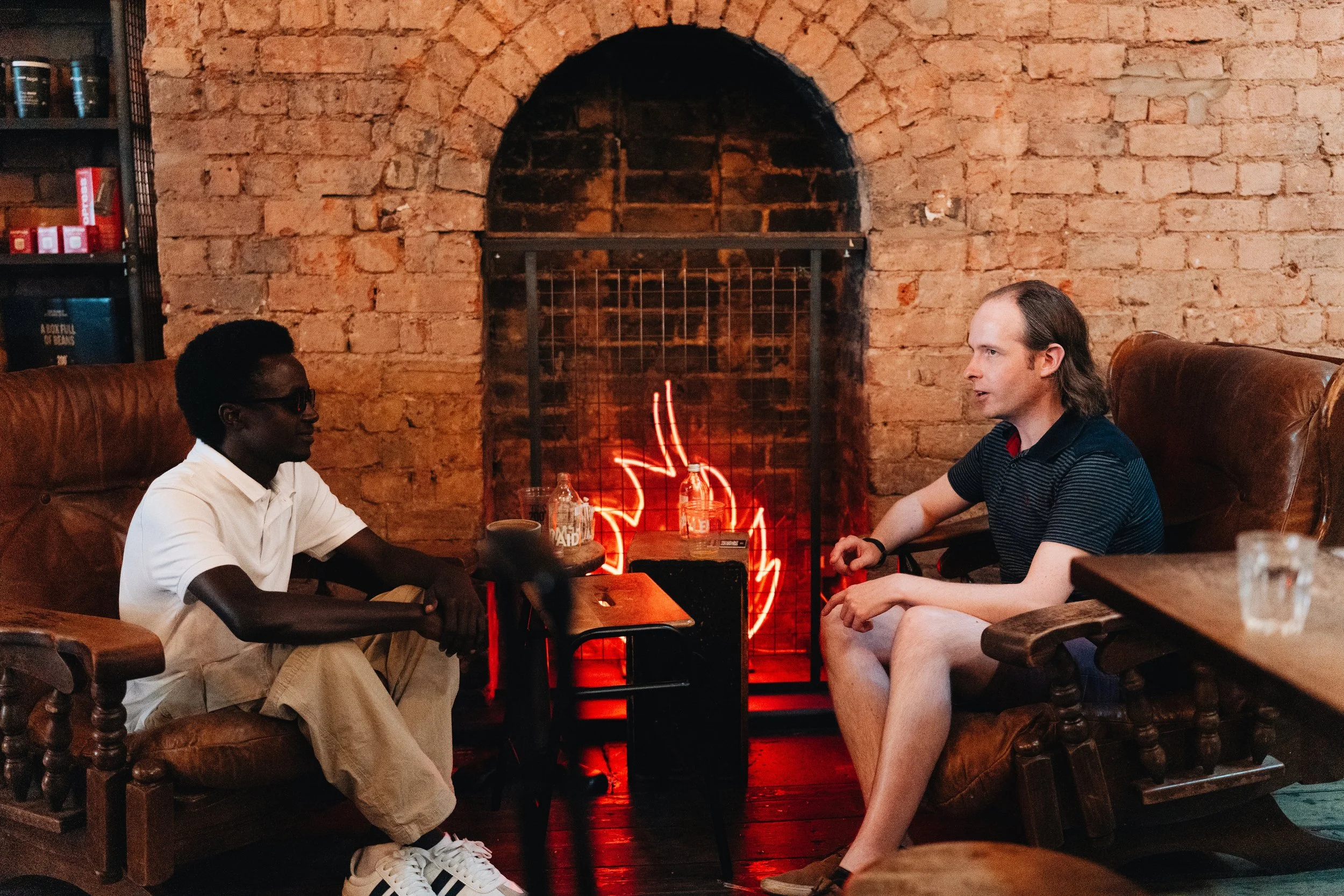
A refugee who was befriended while he lived in Birmingham several years ago, before he moved to Glasgow to study and then complete a PhD, included thanks to Restore and his befriender in the Acknowledgement section his PhD which was published in 2025.
We’ve anonymised that statement, “I thank Restore Birmingham, who helped me journey into the academic study and with settling in the UK. The support during my family reunion process and after the arrival of my family was special. I give special thanks to Restore whose introduction to a volunteer befriender, who was a Warwick University lecturer, was a pivotal moment in my academic journey. Mentoring, from my befriender, significantly transformed my academic experience. His unwavering support has given me self-confidence and determination and contributed to my professional growth in the UK. I am deeply grateful for the support from Restore; your assistance and motivation have significantly impacted my life, and I sincerely thank you for everything you have done to help me achieve this success.”
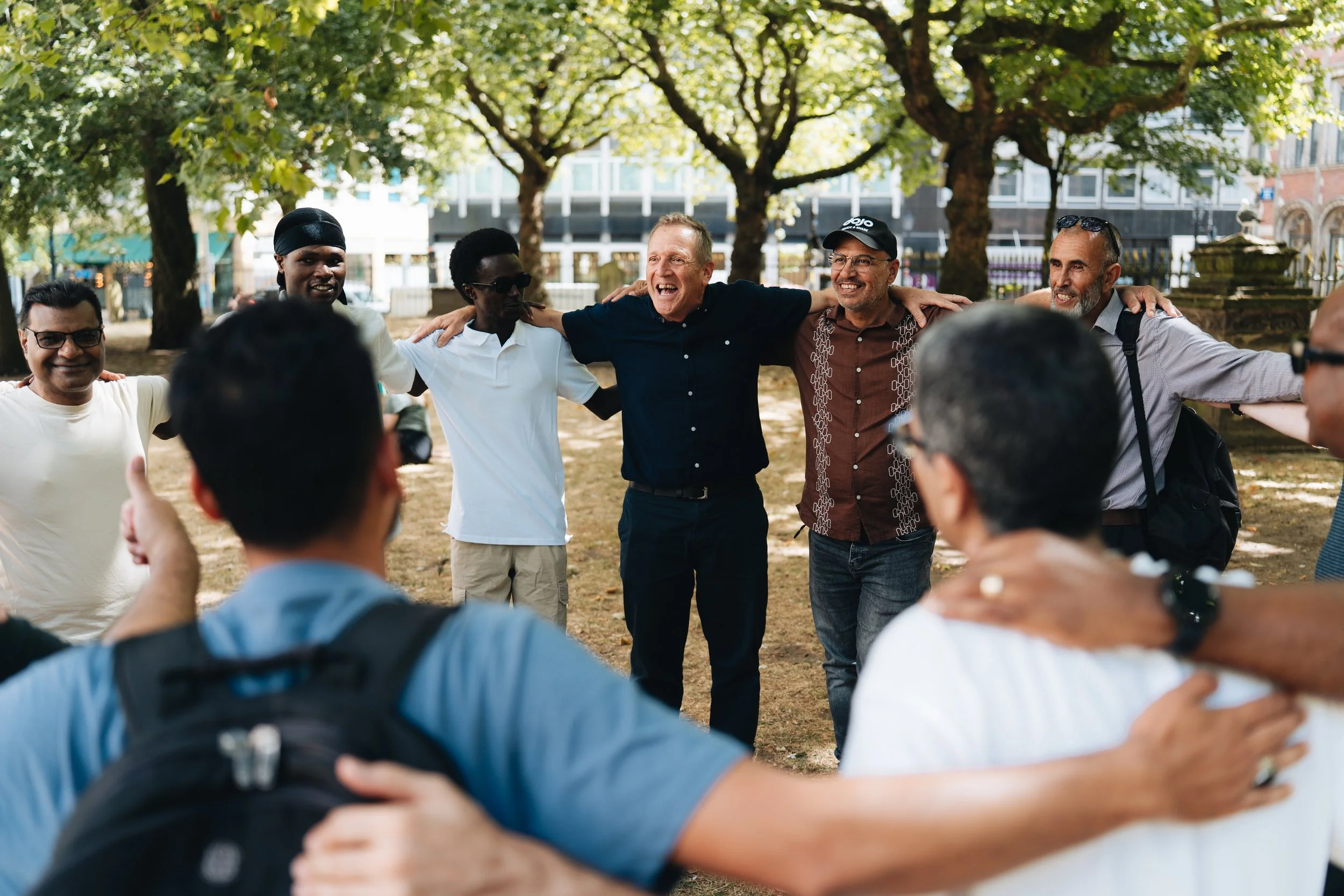
Do those outcomes and impacts equate to increased integration? We should unpack what we mean by integration. In wider society there seems to be an understanding that integration is equivalent to assimilation i.e. speaking fluent English, having a job, switching to British cultural norms and it appears that some would go further to include ditching the refugee’s own culture, heritage and beliefs. At Restore, we believe that narrow, one-sided understanding of integration fails to include the opportunity for the host community to learn from refugees and have an approach that seeks to be mutually beneficial.
Alongside integration with its many interpretations, we need to look at the concept of belonging. If a refugee has a good job and excellent English, is that really integration if they don’t feel that they belong in the host community? Over time do refugees develop a sense of belonging to Birmingham and the UK? Do volunteers increase in their understanding and experience of refugees being part of their community? We believe that part of the impact of Restore’s work is refugees having an increasing sense of belonging in their new environment and feeling that they are more integrated and volunteers learning and developing too. That may be a slow process. It may happen one befriending relationship at a time.
That is still progress.
That is still impact.